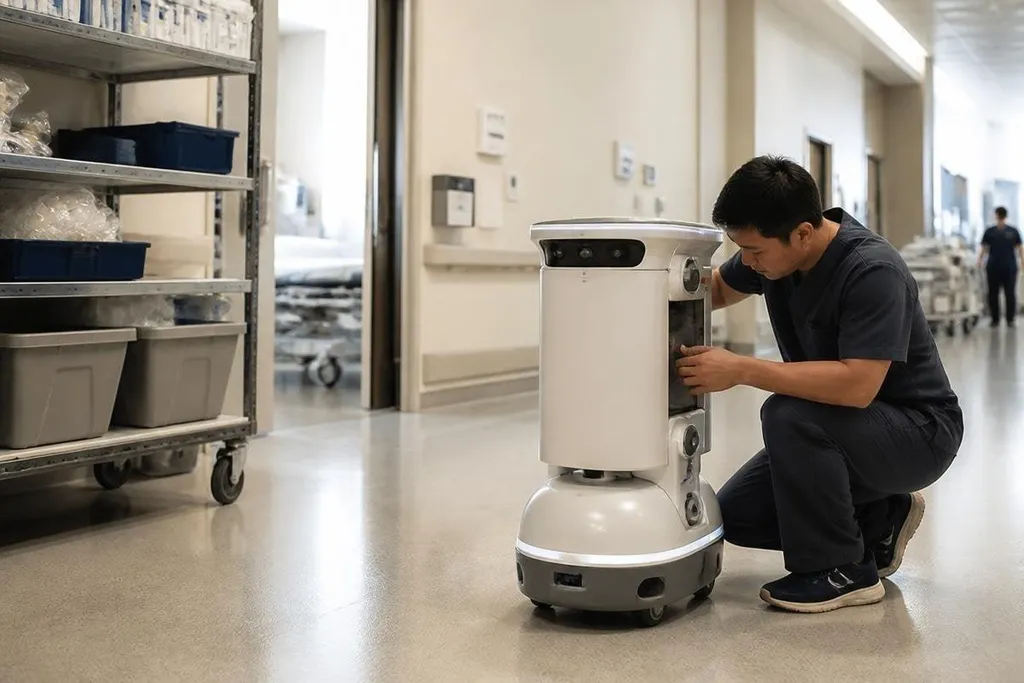
A healthcare robot can move supplies, guide therapy, assist surgery, or help a person at home. The business opportunity often sits around that machine: installation, training, safety checks, software, repairs, and payment.
If you’re assessing this market, the first question is practical: who pays, what problem gets solved, and what work continues after delivery?
Quick read
- Hospitals can buy a robot, but they also need setup, staff training, maintenance, and workflow changes.
- Care homes and home-care providers may pay for services that reduce routine physical work.
- The open risk is proof: a robot must fit clinical rules, staff habits, and a clear budget.
Where the money starts
Selling hardware is one path. It also carries high costs for design, testing, production, storage, and field repairs. A company can enter the market with a smaller service built around robots made by someone else.
That service could install a mobile robot in a hospital, connect it to local systems, and train staff on safe use. The same company might charge for scheduled checks, replacement parts, software updates, and help when the robot stops working.
This model gives buyers one contact for the work around the machine. It also gives the service company a reason to stay involved after the first sale.
The contract must state what is covered, how fast a technician responds, and who pays for parts.
Four business paths
Healthcare robots create different needs in different care settings. A delivery robot in a hospital has different needs from a rehabilitation device in a clinic, so the business model must follow the task.
A mobile robot can carry supplies, meals, or samples inside a facility. A business could sell route setup, lift and door checks, fleet software, staff training, and repair work.
The hard part is fitting the robot into working corridors and existing procedures. A service team may need to map routes, set access rules, and test what happens when a person blocks the robot’s path.
A therapy robot may help with repeated movement under clinical supervision. The business around it can include setup, therapist training, patient records, cleaning, and regular mechanical checks.
The buyer will need a clear answer about staff time. If a device needs a therapist beside it for every session, the cost may rise even when the robot performs the movement well.
A home robot faces tighter limits. Door widths, floor surfaces, internet access, pets, and family routines can affect use. Companies may earn money from installation visits, remote help, replacement parts, and scheduled home checks.
Privacy also needs a plain answer. A robot with cameras or microphones may collect information inside a person’s home, so the seller must explain what data it records, where it goes, and how long it stays there.
Hospitals need people who can run the robot, pause it, clean it, and report faults. Training companies can build courses for nurses, therapists, facilities teams, and biomedical engineers.
Safety work can become a separate service. That may include risk reviews, emergency-stop drills, access controls, and records showing that staff received instruction.
A hospital buyer can use Robot24 to compare named healthcare robots with reported prices, tasks, and deployment details. That evidence helps separate a machine sale from the training, safety, and support work that may follow.
What can stop a sale
Healthcare buyers rarely assess a robot on movement alone. They also need to check cleaning, access, noise, battery charging, software updates, staff training, and repair time.
A robot may work well in a controlled demonstration and still fail in a busy ward. A doorway may stay closed, a lift may be in use, or staff may need to move the machine by hand during an emergency.
The buyer also needs a payment plan that matches the work. A one-time sale may suit a small clinic with technical staff. A monthly service contract may suit a hospital that wants repairs, software, and training handled by one supplier.
I’d start with service and integration before building a new healthcare robot. That route needs less factory capacity and puts the company close to the problems that hardware makers may miss.
A practical business checklist
Before funding a product or service, check these points:
- Name the payer: hospital, clinic, care provider, insurer, or patient.
- Define the task: state the work the robot does and the staff time it changes.
- Price the full term: include setup, training, software, parts, labour, and removal.
- Test the setting: check doors, lifts, floors, cleaning rules, network access, and storage.
- Set safety duties: record who approves use, trains staff, handles faults, and reports incidents.
- Prove the gap: show what remains untested before asking a buyer to expand the service.
The next useful step is a small paid pilot with one task, one site, and a written service plan. If the robot cannot fit the site’s daily work without extra staff or unclear repair costs, the business case needs more work before the hardware does.