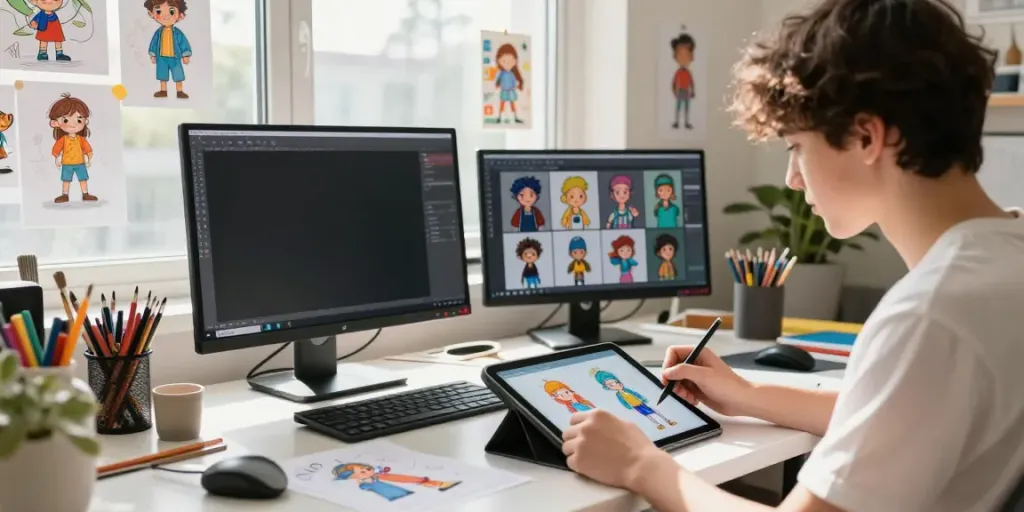
Understanding the Importance of Character Consistency
In the world of visual storytelling, character consistency is paramount. For authors, illustrators, and game developers, maintaining a unified character appearance across multiple scenes and mediums can be the difference between an engaging narrative and a confusing one. With the rise of digital tools, AI character generators have emerged as a revolutionary solution for those looking to create consistent and aesthetically cohesive characters. One such tool, the AI character sheet generator, is designed to streamline this process, ensuring that characters maintain their unique identities regardless of the artistic context.
Why Consistency Matters in Visual Storytelling
Consistency in character design serves several critical purposes in visual storytelling. One of the primary reasons is audience recognition; readers should be able to identify characters instantly, regardless of the scene or medium. Characters who look different each time they appear can confuse viewers and detract from the overall narrative. Furthermore, achieving a cohesive style enhances the professional quality of the work, allowing for greater immersion and connection with the audience.
Common Challenges with Traditional Character Design Methods
Traditionally, character design has involved the painstaking process of sketching, refining, and often re-sketching to achieve the desired look. This method is not only time-consuming but also fraught with inconsistency risks. Artists may inadvertently alter key characteristics such as hairstyle, skin tone, or clothing, leading to a disconnect in how the character is perceived across different panels or scenes. Moreover, manual tracking of character traits and updates adds another layer of complexity, particularly in long-running series where characters may evolve over time.
How AI Character Sheet Generators Solve These Issues
AI character sheet generators mitigate these challenges significantly. They provide a structured approach to character design, enabling artists to generate a complete reference sheet that includes multiple angles and styles. This comprehensive documentation ensures that characters remain visually consistent, regardless of the artist's interpretation or the medium used. By simply describing the character or uploading images, creators can produce a detailed character sheet that serves as a reliable reference point, streamlining the entire creative process.
Key Features of an Effective AI Character Sheet Generator
An effective AI character sheet generator should encompass various features that enhance usability and the quality of the generated content. Let’s explore some of the most crucial elements.
Multi-Angle Character References
One of the standout features of a robust AI character sheet generator is its ability to provide multi-angle references. This functionality is essential for artists and designers, as it allows them to see the character from different perspectives—front, side, back, and three-quarter views. Such comprehensive visual information is critical in ensuring consistency during the illustration process, particularly in projects like graphic novels or animated series where angles can shift dramatically between frames.
User-Friendly Interface for Quick Design
The best AI character sheet generators boast user-friendly interfaces that facilitate quick and efficient design workflows. By simplifying the process of creating a character sheet, users can focus more on the creative aspects rather than getting bogged down by complicated tools. For instance, intuitive drag-and-drop functionalities and straightforward prompt fields can drastically reduce the time required to generate a set of character images.
Integration with Other Design Tools
Another vital feature is the ability to integrate seamlessly with other design software. This compatibility allows artists and developers to incorporate generated character sheets into their existing workflows without significant disruptions. Whether using software for 3D modeling, game development, or graphic design, the ability to easily import and export character sheets ensures a smooth transition between different stages of the project.
Best Practices for Using AI Character Sheet Generators
While AI character sheet generators offer powerful tools for creating consistent characters, there are best practices that users should follow to maximize their effectiveness. Here are some actionable insights.
Steps to Create a Cohesive Character Portfolio
- Define Character Traits: Start by detailing key traits such as age, build, hair color, and distinguishing features. This clarity will guide the AI in producing a more accurate output.
- Utilize Reference Images: When available, upload multiple images of the character from different angles. This ensures the AI has adequate information to create a well-rounded character sheet.
- Keep It Updated: As characters evolve throughout a story or series, revisit the character sheet to update essential traits and appearances. This practice maintains cohesion and helps avoid inconsistencies as the narrative progresses.
Leveraging Character Sheets for Multiple Mediums
AI character sheets are versatile tools that can be effectively leveraged across various mediums, including animations, graphic novels, and video games. By producing a consistent character design, creators can adapt the character for different storytelling contexts without losing the essence of their original design. This adaptability is essential in industries such as gaming, where characters might be represented in both 3D and 2D formats.
Utilizing Feedback for Character Refinement
Engaging with audiences and soliciting feedback can provide invaluable insights into character design. After generating a character sheet, presenting it to test audiences can reveal areas for improvement or aspects that resonate well. This iterative feedback loop allows creators to refine their character designs further, ensuring they are not only visually appealing but also relatable to the target audience.
Case Studies: Successful Character Design with AI Tools
Several independent artists and companies have successfully utilized AI character generators to streamline their character design processes. Here are some remarkable case studies demonstrating the effectiveness of these tools.
Independent Artists Thriving with AI Technology
Many independent artists have embraced AI tools to enhance their workflow. For example, artist Mia Thompson utilized an AI character generator to create distinct characters for her graphic novel series. By generating character sheets that included multi-angle views and color palettes, she was able to maintain consistency across her artwork, significantly reducing the time spent on character revisions. Mia reported that integrating this technology allowed her to focus more on narrative development rather than getting lost in the intricacies of character design.
Game Developers Streamlining Character Creation
In the gaming industry, character consistency is crucial for player immersion. Developer studios like Pixel Dreams implemented an AI character sheet generator to create and manage their cast of characters efficiently. By generating reference sheets that included various expressions and poses, they ensured that their characters remained on-model throughout the game. This approach not only improved the game's visual cohesion but also optimized the animation process, allowing for fluid character movements that resonated well with players.
Publishers Enhancing Consistency in Graphic Novels
Publishers of graphic novels have also seen the benefits of AI character design tools. A notable example is Blue Moon Publishing, which used an AI character sheet generator to establish character designs for a new series. By providing artists with complete character sheets that included different expressions and outfits, they minimized discrepancies between artists contributing to the project. The outcome was a visually harmonious novel that captivated audiences and set a new standard for collaborative graphic storytelling.
Future Trends in AI Character Design for 2026 and Beyond
As technology continues to evolve, the future of AI character design holds exciting possibilities. Here are some emerging trends to watch for in the coming years.
Emerging Technologies in AI Character Development
With advancements in machine learning and AI, we can expect character design tools to become even more sophisticated. Future iterations of AI character generators may incorporate real-time feedback mechanisms, allowing users to tweak character designs while seeing immediate results. Furthermore, the integration of augmented reality (AR) could enable designers to visualize how characters interact within different environments in a more immersive way.
Predictions for AI's Role in Creative Industries
AI's influence in creative industries will likely expand significantly by 2026. As more creators recognize the efficiency of AI tools in character development, we can expect a surge in their adoption across various media formats. From independent creators to major studios, the use of AI character generators will likely become a standard practice in character design, enhancing both productivity and creativity.
Ethical Considerations in AI Character Generation
As AI technologies advance, ethical considerations will become increasingly important. Issues such as copyright, ownership, and the representation of diversity in character design must be addressed as creators rely more on AI tools. Engaging in discussions around these topics will be essential to ensure that AI-generated characters are inclusive, respectful, and representative of a broad range of experiences.
What Can AI Character Sheet Generators Learn from User Experience?
User experience will play a critical role in shaping the future development of AI character sheet generators. Feedback from users can drive updates and improvements, ensuring that tools align with the evolving needs of designers and artists. Incorporating features that enhance usability, such as customizable templates and easier access to user-generated content, will contribute significantly to user satisfaction.
Are AI characters the future of storytelling?
As we move forward, it is clear that AI characters are becoming an integral part of the storytelling landscape. With their ability to maintain consistency across various artistic styles and mediums, AI-generated characters not only enhance the visual appeal of narratives but also allow for imaginative storytelling. The combination of creativity and technology demonstrates a promising future for character design, unlocking new possibilities for artists and audiences alike.